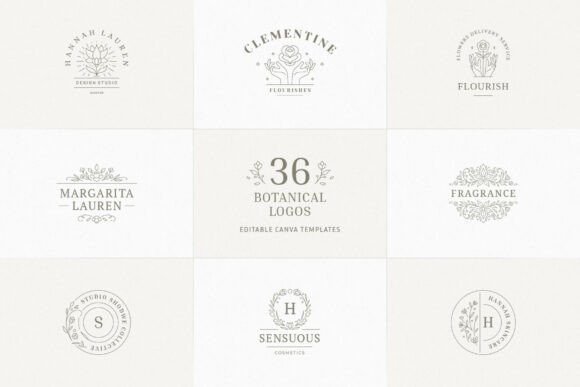
36 Botanical Logo Templates for Canva: Your Branding Toolkit
Building a cohesive brand identity from scratch is a significant undertaking. It often involves a deep dive into color theory, typography, and visual language, which can be both time-consuming and expensive. For many entrepreneurs, designers, and creatives, the quest for a logo that feels both professional and authentic is a major hurdle. This is where a well-designed template collection can provide a powerful head start, offering a foundation of professional design that can be customized to fit a unique vision. The 36 Botanical Logo Templates for Canva are crafted specifically for this purpose, providing a sophisticated starting point for nature-inspired branding.
The Aesthetic: Sophisticated, Minimalist, and Line-Art
The core personality of this collection lies in its refined simplicity. These are not cluttered or overly ornate designs. Instead, they embrace a minimalist philosophy, using clean lines, balanced compositions, and a restrained color palette to convey elegance. The line-art style gives each logo a timeless, hand-drawn quality that feels personal and artisanal, yet structured enough for commercial use. This aesthetic avoids fleeting trends, aiming instead for a classic appeal that can grow with a business. The botanical elements—delicate leaves, elegant florals, and organic shapes—are integrated seamlessly, suggesting a connection to nature without being literal or cartoonish. This creates a versatile foundation suitable for brands that value clarity, professionalism, and a touch of organic warmth.
Understanding this visual character is key to seeing where the templates fit best. The collection functions much like a premium font family; it’s a creative font asset designed for specific applications. Just as a serif font conveys tradition and a sans serif font suggests modernity, these botanical logos communicate a specific set of values: care, attention to detail, natural quality, and understated luxury. This makes them particularly effective for businesses where these qualities are central to the brand promise. The consistent line weight and stylistic approach across all 36 designs ensure that whichever template you choose, it will share the same design DNA, which is crucial for building a recognizable brand identity.
Practical Applications Across Industries
The true value of a design asset like the 36 Botanical Logo Templates is measured by its real-world utility. This collection is not just for florists or plant shops, though it is a natural fit. Its versatility extends to a wide range of creative and commercial projects. A photographer specializing in outdoor portraits or weddings could use a botanical submark as a watermark, adding a subtle signature to their work. A brand strategist working with a new wellness coach or a yoga studio could leverage these templates to quickly develop a visual identity that feels serene and grounded. For entrepreneurs in the beauty and cosmetics space, particularly those focusing on natural or organic products, these logos provide an immediate way to signal that ethos to customers.
Beyond primary logos, the kit’s strength lies in creating a complete branding suite. With 36 options, you can establish a primary logo for your website header, a secondary, simplified version for social media profile pictures, and a distinct submark for favicons, stamps, or packaging seals. This level of consistency is fundamental to professional branding. In editorial design, a botanical logo can be adapted as a recurring motif in a magazine or blog, reinforcing brand recognition. For packaging design, the clean lines translate beautifully to labels, boxes, and stickers, offering a premium look that stands out on a shelf. In web design and social media graphics, these logos ensure that every touchpoint, from an Instagram story highlight cover to a website favicon, feels intentionally crafted and part of a unified whole.
Integrating These Templates into Your Workflow
Approaching a template collection effectively requires more than just picking a design you like. It’s about evaluating fit and planning for customization. Start by considering your brand’s core personality. Is it playful and whimsical, or serious and professional? The minimalist nature of these templates leans toward the latter, but their simplicity can be adapted. A key step is to test how the logo looks at various sizes—a crucial aspect of logo design. A mark that is elegant in a header might lose detail when scaled down for a favicon. The line-art style of this collection generally holds up well at smaller sizes, a practical advantage for digital applications.
When customizing in Canva, think beyond just changing the business name. Experiment with the color palette to align with your brand’s established colors. Consider how the logo will pair with your chosen typography. A font pairing exercise is essential; you might combine a botanical logo with a clean modern typography typeface for headings and a highly readable body font. The goal is visual harmony, not competition. Since these are Canva templates, they are beginner-friendly by design, but a thoughtful approach will yield more professional results. Test your final logo in mockups—on a business card, a website mockup, and a social media post—to see how it performs in context. This process of evaluation and refinement transforms a template into a unique asset that truly represents your brand.
Key Considerations for a Cohesive Brand
- Evaluate Project Fit: Does the minimalist, botanical style genuinely reflect your brand’s story and audience expectations? It’s a perfect fit for nature, wellness, and artisanal brands, but might be less suitable for a tech startup or a gritty urban fashion label.
- Review Included Styles: Explore all 36 designs. Some may feature more intricate florals, others might use abstract leaf patterns. Choose a primary logo that has strong presence, and secondary marks that offer flexibility.
- Test Font Pairings: Your logo will rarely appear in isolation. Ensure it complements the serif font or sans serif font you use for body text. The goal is a balanced visual hierarchy where the logo and typography work together.
- Readability is Key: While the botanical elements are decorative, the business name must remain legible at all intended sizes. Test it on both light and dark backgrounds.
- Understand Licensing: The templates are editable in the free version of Canva, but it’s always prudent to review the specific terms of use for any commercial font or asset to ensure they align with your project, especially for large-scale commercial use.
Ultimately, the 36 Botanical Logo Templates for Canva are more than just a set of pre-made images. They are a strategic toolkit designed to solve a common problem: creating a polished, professional, and cohesive visual identity efficiently. By understanding their inherent style and applying them thoughtfully, you can build a brand presence that feels both beautiful and built to last. They offer a practical path to achieving the kind of visual consistency that builds audience trust and recognition, which is the cornerstone of any successful brand identity.